Tag: FestiveFashion

  • 5 Modern Ways to Drape a Saree

    5 Modern Ways to Drape a Saree

    The six-yard staple, five fresh attitudes. From the classic Nivi to the belted drape — find your signature style.

    The five drapes

    1. Classic Nivi: pleats tucked at the waist, pallu over the left shoulder — timeless, foolproof.
    2. Bengali athpourey: the pallu wrapped around twice with keys and a broad border — heritage drama.
    3. Gujarati seedha pallu: pallu drawn from back to front over the right shoulder — regal and bridal.
    4. Belted Indo-western: cinch the waist with a sleek belt over the saree — modern, structured, red-carpet ready.
    5. Dhoti / pant style: pleats tucked like trousers with a short pallu — the fashion-forward favourite.

    Pleating pointers

    Press pleats with your palm, not just pins — crisp pleats are the whole look. Taller drapes suit longer pallus; petite frames should keep the pallu fall above the knee line of the leg.

    Stylist tip: drape on the blouse you’ll actually wear and walk around the house for ten minutes. Adjust now, not at the venue.

  • Sharara vs Gharara vs Lehenga: Which One Is for You?

    Sharara vs Gharara vs Lehenga: Which One Is for You?

    Three icons of festive dressing, three very different personalities. Here’s how to choose — by occasion, body type and vibe.

    Sharara — the showstopper

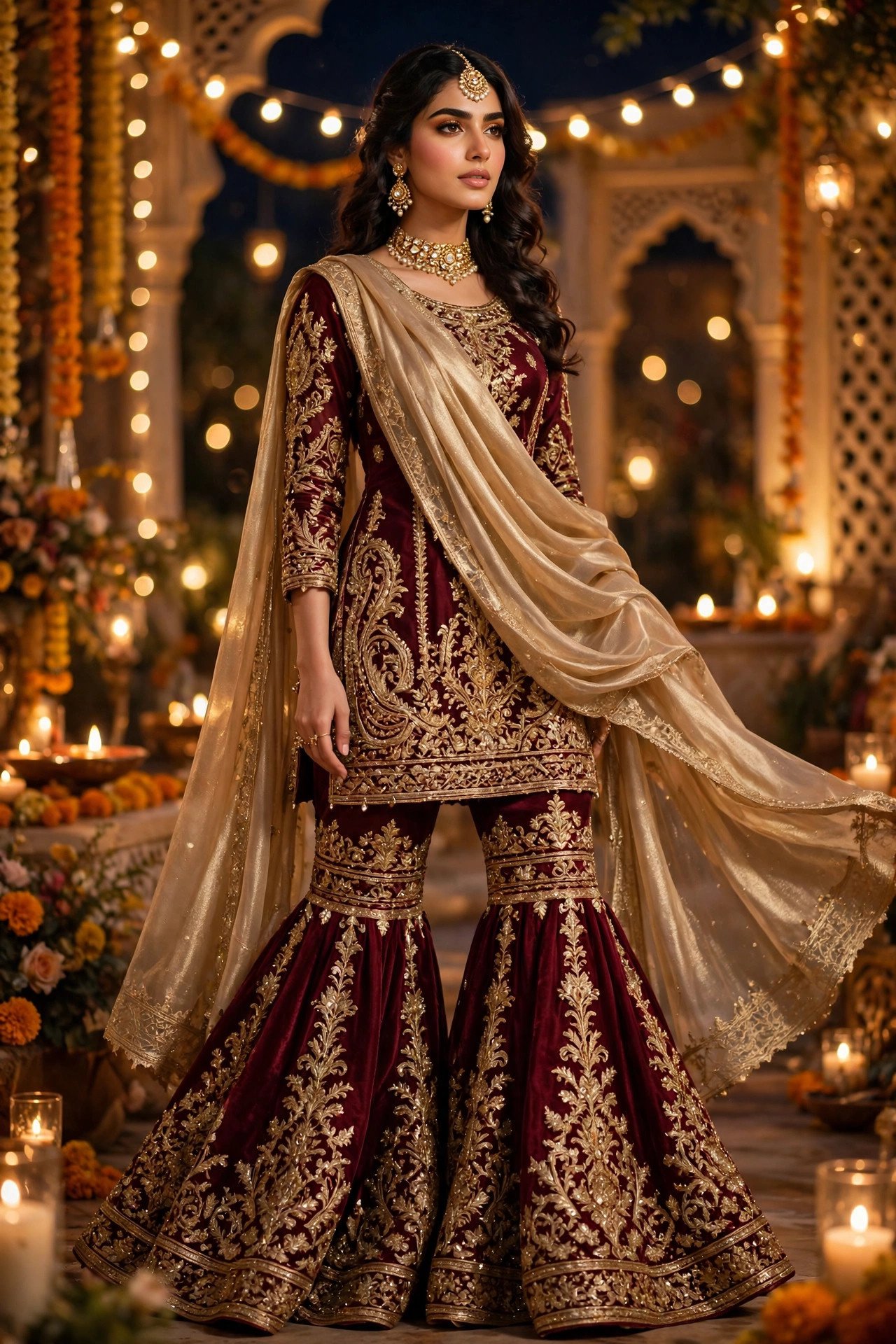
    Flared trousers from the waist with a short kurti. Maximum drama, maximum twirl. Best for: weddings, receptions, sangeets. Suits most body types because the flare balances proportions beautifully.

    Gharara — the royal

    Fitted to the knee, then flaring out — traditional Awadhi royalty. Best for: nikah ceremonies, formal festive evenings. The knee-band detailing draws the eye; petite frames should keep the flare moderate.

    Lehenga — the classic

    Flared skirt with cropped choli and dupatta. Best for: brides, bridesmaids, big festive nights. A-line cuts flatter curvier frames; panelled lehengas add height to petite ones.

    The quick verdict

    Want drama? Sharara. Want heritage? Gharara. Want timeless bridal? Lehenga. When in doubt, try all three — the mirror decides in seconds.

    Stylist tip: sit, walk and twirl in the trial room. Festive outfits are worn for hours — comfort is non-negotiable.

  • The Festive Ethnic Edit: Shararas, Lehengas & Ghararas

    The Festive Ethnic Edit: Shararas, Lehengas & Ghararas

    Wedding-season dressing, decoded. Sharara or lehenga? Velvet or organza? Here’s how to choose — and style — festive ethnic wear like a pro, whatever the celebration.

    Know your silhouettes

    • Sharara — flared trousers from the waist with a short kurti; regal, dramatic, made for grand entrances.
    • Gharara — fitted to the knee, then flaring out; traditional Awadhi royalty.
    • Lehenga choli — flared skirt with cropped blouse and dupatta; the wedding staple.
    • Saree — six yards of pure elegance; never out of style, endlessly re-drapable.

    Fabric & embroidery guide

    Velvet owns winter nights — deep maroon, emerald and navy in velvet photograph beautifully under festive lights. Organza and chiffon suit daytime events with their lightness. For embroidery: zardozi and dabka for bridal-level grandeur, threadwork and mirror work for festive-but-approachable.

    Styling for the occasion

    Weddings: go maximal — layered necklaces, a statement maang tikka, embroidered clutch. Festive dinners: one hero piece (the outfit or the jewellery, never both at full volume). Eid & Diwali daytime: pastels and champagne golds with delicate jewellery.

    Jewellery pairing cheat sheet

    Maroon + gold embroidery loves polki and kundan. Champagne and pastel outfits sing with emeralds or pearls. Royal blue pairs strikingly with diamonds or silver-toned pieces.

    Stylist tip: drape your dupatta three ways before deciding — over one shoulder (classic), pleated over both arms (regal), or as a veil over the head (bridal). The same outfit tells three different stories.